
Even as regulatory focus has zeroed in on foreign e-commerce giant Amazon, a domestic retail giant has been created almost below the radar in Reliance Retail (RR), one of the most crucial businesses for the group's future. From doorstep delivery of groceries, apparels to branded jewellery, medicines, toys, furniture to high street retailing, RR's presence in the world's fourth largest consumer market is just one part of the story.

In mid-2020, when Kushal Pal Singh, the undisputed king of India's vast real estate market, relinquished the top post at the country's largest realtor, he left behind an empire that is best compared to the Greek myth of the Phoenix. Once the leader of Delhi's organised real estate market, DLF's steep decline in the 1970s and its majestic rise since has often been cited as a business resurrection story. Now, a year after his departure from the helm of affairs, history seems to be repeating itself at the real estate major. In the 1970s, it was the government prohibitions that had forced DLF to venture into uncharted territory; some five decades later, the Delhi-headquartered firm has set its eyes on another growth trajectory that holds immense potential.

'We will see footfall returning to pre-COVID levels by January.'

In spite of a severe second wave of the coronavirus pandemic, and a widespread disruption in public life therefore, India's fast-moving consumer goods (FMGC) sector seems to have emerged as one of the most resilient segments of the economy. The early numbers and estimates for the April-June quarter indicate a steady recovery in FMCG players' business, which is now set to exceed the pre-pandemic level. Amid nationwide lockdowns because of the first Covid wave, FMCG revenues had been severely affected in mid-2020.

'The spurt in demand for Ayurvedic products has exhausted our production capacity.'

Higher prices are burdening household budgets and threatening the margins of leading manufacturers.

According to the local Brass Handicrafts Manufacturers Association (BHMA), some 800,000 people are directly employed in Moradabad's massive brass handicrafts and utensils manufacturing industry, which has some 30,000 small and micro-scale units and a total annual turnover of Rs 10,000 crore. The manufacturers are heavily dependent on export markets such as the US, Canada, Australia and the European Union. And exports account for nearly 70 per cent of their revenues. According to industry insiders, since this year's lockdowns, manufacturing has been at 65 per cent of normal levels.


The probe agency is learnt to have taken possession of multiple physical and digital records during a search operation conducted on the premises of the South Korean firm in Delhi and Mumbai this week.

Nasper-backed fintech firm PayU has started talks to acquire domestic payment gateway major BillDesk, and the deal size could be in the range of $3-4 billion, sources in the know said. "BillDesk has been open to being acquired for some time now, but in the past the valuations that the company was seeking proved to be a hurdle," said a source. "Three years ago too, PayU had approached BillDesk for an acquisition, but things didn't go ahead due to high valuations. "BillDesk had asked for $2-billion value then," said the source.

The key demand drivers -- such as low home loan rates and income tax sops, particularly for affordable housing -- that supported the recovery in H2 FY2021, remain in place and will spur recovery again, feel experts.
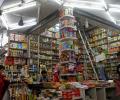
Sanjiv Mehta, chairman of the country's largest consumer goods company, HUL, believes that the second wave of the Covid-19 pandemic between April and June this year has been a mere pause in India's consumption story, and that it will not change the country's overall growth trajectory. India is poised for growth, especially in the fast-moving consumer goods (FMCG) sector, Mehta told shareholders at the company's annual general meeting on Tuesday. The signs of recovery are becoming evident with many states lifting lockdown restrictions in recent weeks.

Rising prevalence of work-from-home and e-learning is driving sales of notebooks and tablets for most brands, but Apple's superior performance has more to do with its product quality.

PharmEasy has acquired Medlife for an undisclosed amount, the e-pharmacy unicorn said on Tuesday. The deal will make PharmEasy the largest player in the domestic online pharmacy sector, with the combined entity set to serve 2 million customers a month.

Banking technology start-up Zeta is the latest entrant to the unicorn club after raising $250 million in its Series C round from SoftBank Vision Fund 2. Sodexo participated as an additional minority investor in the round. Founded by serial entrepreneur and billionaire Bhavin Thurakia, the startup is now valued at $1.4 billion. It is the 14th company this year to cross the $1 billion valuation mark after Meesho, Cred, Pharmeasy, ShareChat, Moglix and others.

Consultants who help lease these properties say this is the steepest decline at least in a decade.

Apple was a fringe player in all key categories like smartphones, notebooks, and tablets till recently. But with the last quarter's record-breaking performance, the brand has established itself in the country's price-sensitive consumer electronics market.
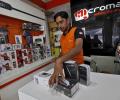
According to research firm IDC, a slowdown in smartphone shipments began showing up as early as late February, though companies insist that the March quarter was fine, albeit on a low base.

While the record shipments reflects the prevailing mood at the time, the exponential rise in Covid cases in the country has turned the tide since.

From trucks lined up and waiting in the area to local vendors, the scenes tell a story of livelihoods stalled.
 © 2026 Rediff.com - Advertise with us - Disclaimer - Privacy Policy - Sitemap - Feedback - About us - Terms of use - Grievances